

Acne is a distressing problem and sometimes so stubborn that no medications or treatments seem to work. Nowadays, LED has become the latest and most advanced treatment option to clear away the skin imperfection with minimal downtime. It is a medical treatment that involves the exposure of light of particular wavelength over the skin through a light-emitting diode. For acne, blue light phototherapy is used to kill the bacteria, Propionibacterium acnes or P acnes. Several blue-light devices are FDA-cleared for mild to moderate acne and have minimal side effects. It is highly beneficial for people who suffer from mild to moderate acne.
How does blue light work for treating acne?
The excessive production of sebum results in clogged pores which obstructs the hair follicles thus form a microcomedo. The accumulation of cellular debris, lipids, and other environmental pollutants lead to colonization of P. acnes that leads to an inflammatory response resulting in acne formation. With the blue light treatment, the bacterium causing acne absorbs the blue light and gets destroyed by a free radical mechanism. The effect is mainly through photoactivation of porphyrins produced by C. acnes., which makes a person less prone to acne. The number of sessions required for clearing up acne depends upon the severity of acne and area of treatment.
Procedure
The patient’s face is cleansed thoroughly with a gentle cleanser, and all the dirt or makeup is removed. The doctor will provide goggles to the patient to protect the eyes while the patient sits under blue light. Most patients feel little to no discomfort during treatment. After treatment, some inflammation or redness may become noticeable over the treated area, which subsides quickly. The treatment requires no downtime, and the patient can apply makeup directly after the procedure. One should avoid touching or picking the blemishes on their skin between the treatments. One should follow the advice of dermatologist regarding the use of products and home care techniques during and after the treatment. The follow-up sessions are required to maintain results. The results are noticeable between 2-4 weeks or even sooner.
Benefits of Light-Based Therapy
- Safe and gentle: Since only light at a particular frequency is used over a properly cleansed skin, the non-invasive treatment is generally safe and gentle over the skin. People with very sensitive skin types may experience redness, dryness, and swelling which tend to resolve on its own.
- Low-discomfort: The patient does not feel any pain or discomfort. The patient has only to lie down and let the skin be exposed to the blue light. One can immediately resume their daily activities after treatment.
- Drug-free: Studies show blue light can modestly reduce mild to moderate inflammatory acne, usually as an adjunct to standard treatment. Blue light reduces acne bacteria but acne has multiple causes and often needs ongoing treatment.
- Appropriate for all body parts: This treatment can be performed not only over the face but also on the back, arms, chest, etc. where sebaceous glands are overactive.
Combined Red-Blue Light Therapy
The combined light therapy is very effective for improving the skin. The red light stimulates collagen and the blue lights kill bacteria. This helps to remove blackheads, pustular lesions and also improves the skin texture simultaneously.
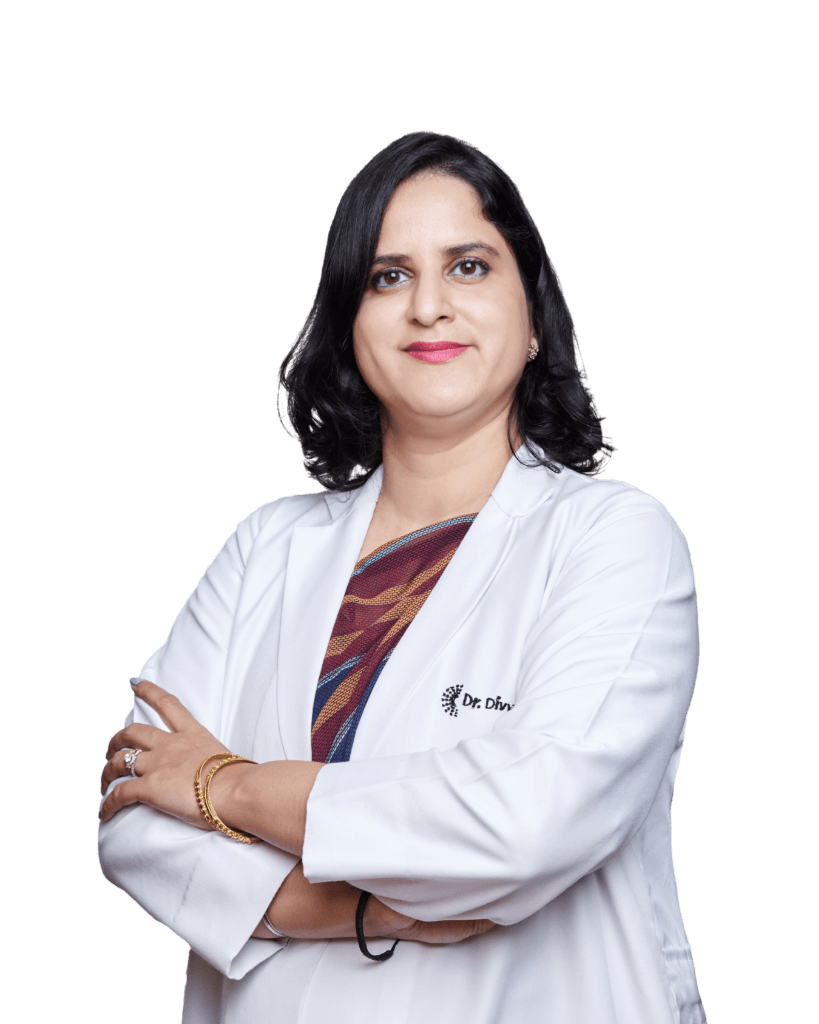
At Dr. Divya’s Skin and Hair Solutions Clinic, advanced light-based therapy is being utilized for improving acne and oily skin conditions of the face. Dr. Divya Sharma, an exceptionally talented and experienced skin specialist in Whitefield aims to offer the most comprehensive and associated with minimal side effects treatment options for her patients. Dr. Divya Sharma is one of the first dermatologists in Bangalore to use this safe and effective modality for treating acne without using antibiotics at very economical prices.At Dr. Divya’s Skin and Hair Solutions, expert care is provided in a safe, clean, friendly, and comfortable environment, and the treatment outcomes are measured continuously.