
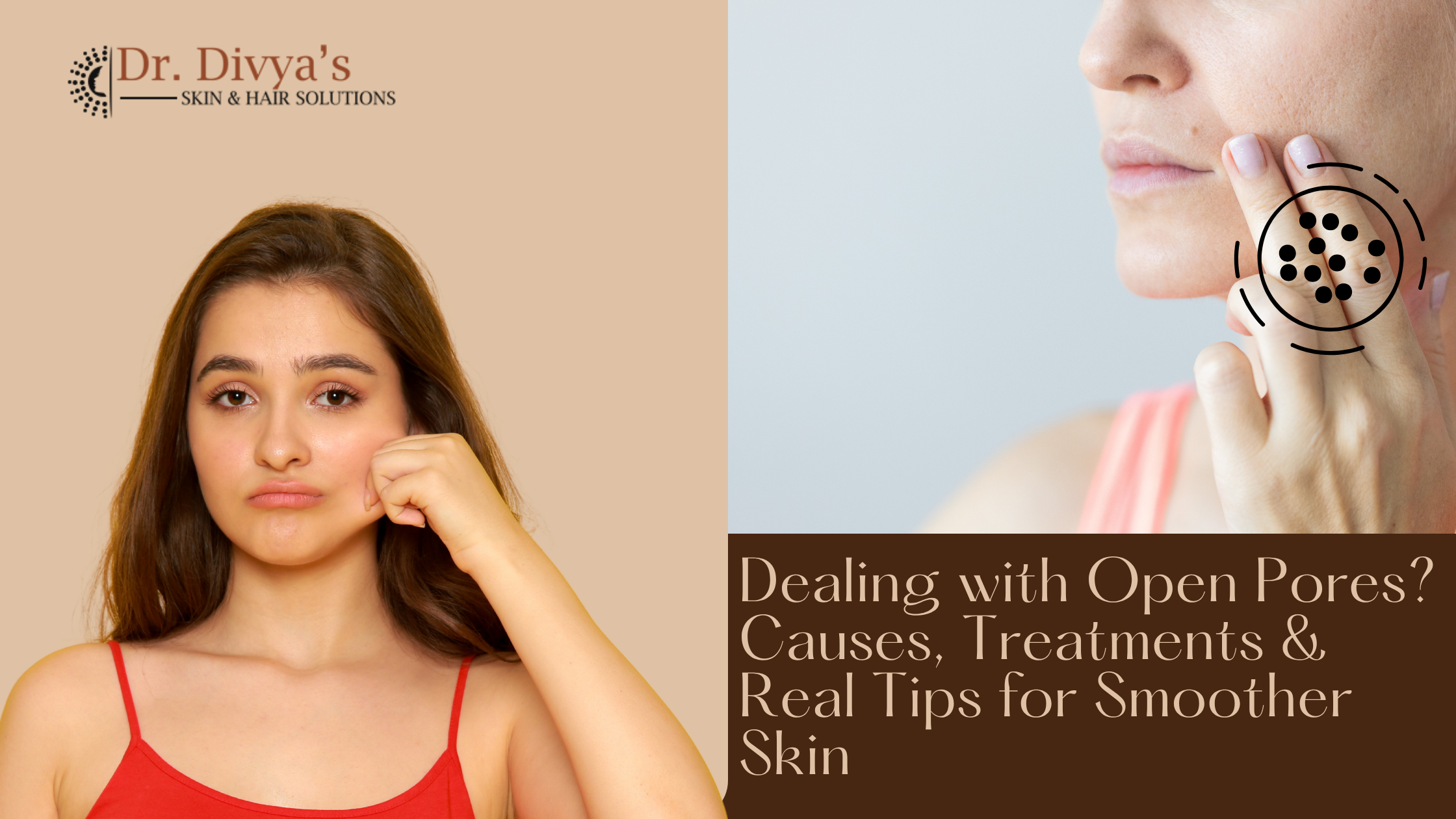
If you've ever stared closely at your reflection and thought, “Why do my pores look so large?”-you're not alone. Open pores are one of the most common skin concerns people deal with, especially in urban cities like Bangalore where heat, humidity, and pollution are part of daily life.
While you can't eliminate pores entirely (they're part of your skin's natural structure), you can reduce their appearance and keep your skin looking refined, fresh, and smooth. Let's explore what really causes open pores, how to treat them, and dermatologist-approved tips that actually work.
What Are Open Pores and Why Do They Appear Larger?
In skin open pores are the tiny ostia from either pilosebaceous follicles or eccrine sweat glands.
Open pores are visible to the naked eye and have much larger dimensions, ranging from 250 to 500 micrometer in size.
Pores are tiny openings in your skin that allow it to release sweat and sebum (natural oil). Everyone has them-but when they get clogged, stretched, or inflamed, they start to appear more visible, especially on the nose, cheeks, and forehead.
Common Causes of Open and Enlarged Pores:
Excess oil production (common in oily or combination skin)
Hormonal changes (especially during puberty, pregnancy, or PCOS)
Skintype- Caucasian and fair skin types are more predisposed
Loss of skin elasticity due to aging or sun damage
Improper skincare habits like skipping sunscreen or over-washing
Genetics - yes, sometimes it runs in the family!
How to Minimize Open Pores: Treatments That Work
Let's be clear-no product or treatment can “close” pores completely, but there are proven ways to make them appear smaller and your skin more even.
1. Chemical Peels
Peels containing salicylic acid, glycolic acid, or mandelic acid gently exfoliate your skin, unclog pores, and promote new cell turnover. This helps refine skin texture and improve pore visibility.
2. Laser Treatments (Like Spectra Laser Peel or Toning)
Some laser and light treatments may modestly improve the look of pores and skin texture-all of which contribute to shrinking the appearance of enlarged pores.
3. Microneedling or RF Microneedling
This technique creates micro-injuries to boost collagen, leading to firmer, smoother skin with visibly reduced pores. We use Endymed intensif – World’s best and gold standard in MNRF which combines microneedling with radiofrequency for even better results.
4. Topical Retinoids
Prescription retinoids or over-the-counter retinol serums can speed up skin cell turnover, reduce oiliness, and refine pore size over time. These should always be used under a dermatologist's guidance.
5. Hydrafacials & Medical-Grade Facials
These treatments deeply cleanse and hydrate the skin while gently exfoliating impurities. When done regularly, they help maintain a cleaner, smoother skin surface.
When to See a Dermatologist
If you've tried home remedies and over-the-counter products without much improvement, it's time to consult a dermatologist. Treatments like laser therapy, medical facials, or prescription skincare can deliver visible, long-lasting changes that store-bought products often can't.
Conclusion
Open pores don't define you-and they're not permanent either. With the right care, consistency, and a bit of dermatological support, your skin can look smoother, healthier, and more radiant.
Know more at drdivyasharma.com. Book your consultation now and take the first step towards smoother, clearer skin!