

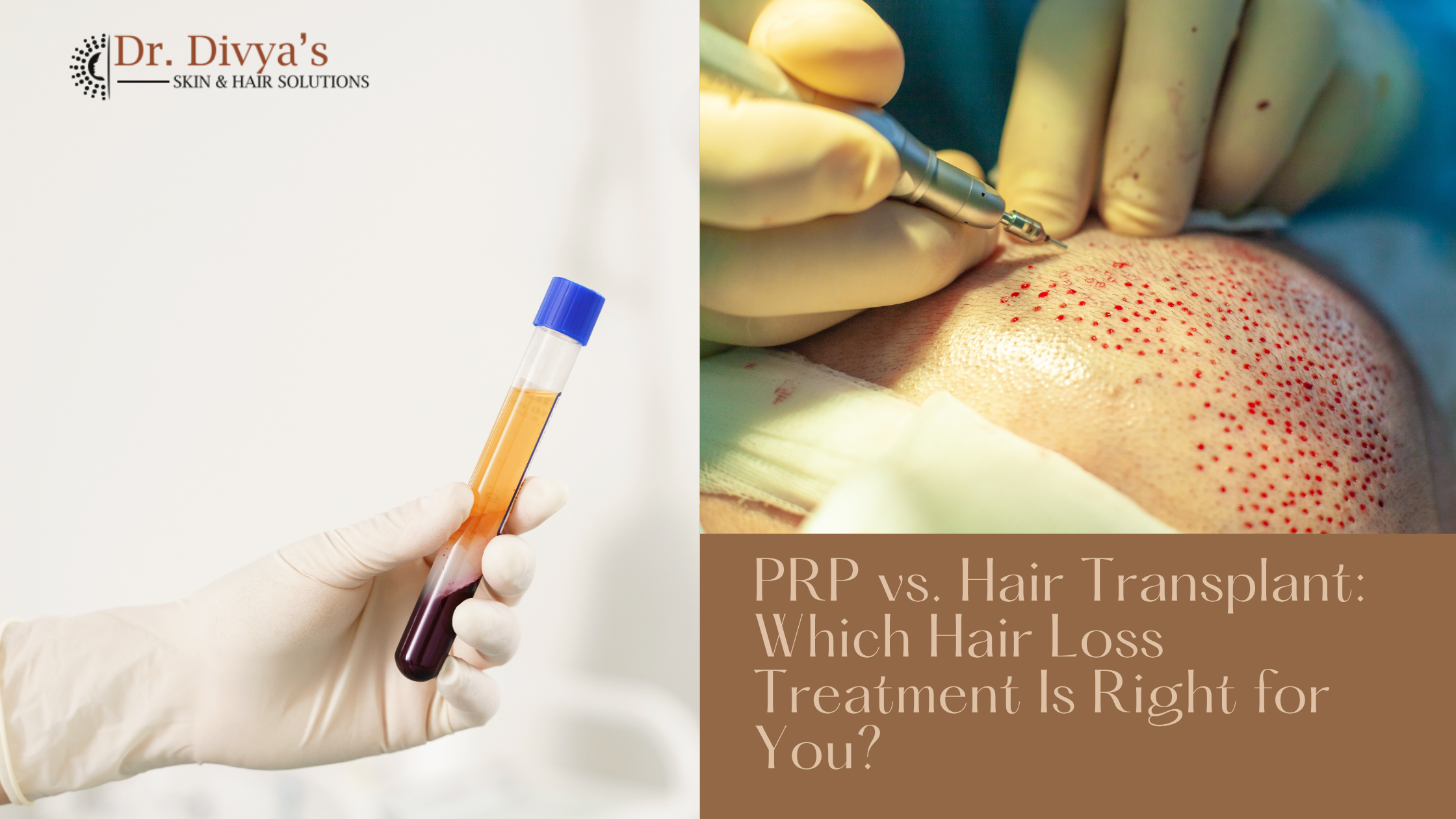
Hair loss is a deeply personal journey. For many, it's not just about aesthetics-it affects confidence, identity, and how we feel about ourselves every day. Confused “Should I go for PRP therapy or get a hair transplant?” Both are popular and effective solutions, but they work very differently and are designed for different stages of hair loss.
While PRP (Platelet-Rich Plasma) therapy uses your body's own growth factors to stimulate thinning hair, hair transplantation is a surgical method that involves relocating hair from dense areas to bald ones.
In this blog, I'll break down the key differences between PRP and hair transplants-so you can decide what's best for your hair goals, stage of hair loss, lifestyle, and budget.
What is PRP Therapy?
PRP therapy is a non-surgical treatment where your own blood is processed to extract platelet-rich plasma. This plasma is injected into the scalp to stimulate hair follicles, promote blood flow, and encourage natural hair regrowth-mainly in thinning areas.
What is a Hair Transplant?
A hair transplant is a surgical procedure where hair follicles are removed from a “donor area” (usually the back of your scalp) and implanted into bald or thinning areas. It's a more permanent solution for advanced hair loss or balding.
PRP vs. Hair Transplant: A Detailed Comparison
| Factor | PRP Therapy | Hair Transplant |
| Best For | Early-stage thinning, hair fall | Bald patches, receding hairlines, advanced loss |
| Invasiveness | Non-surgical, minimally invasive | Surgical, with recovery time |
| Procedure Duration | 30–45 minutes per session | 4–8 hours (one-time or multiple sittings) |
| Downtime | None to minimal (may feel mild soreness) | 5–10 days for full recovery |
| Cost (India) | ?4,000 – ?15,000 per session | ?50,000 – ?1,50,000+ (one-time cost) |
| Results Timeline | Gradual, visible in 2–6 months | Results start in 3–4 months, full growth in 9–12 months |
| Longevity | Temporary; maintenance required |
Transplanted hair is long-lasting, but existing hair may continue to thin, so ongoing medical treatment is usually advised. |
When Should You Choose PRP?
- You are in the early stages of hair thinning
- You're experiencing stress-induced hair fall or postpartum shedding
- You prefer natural and non-surgical solutions
- You want to delay or avoid surgery
- You are looking for a boost in hair density and scalp health
- PRP is also used as a maintenance therapy after a hair transplant to strengthen newly implanted follicles.
When is Hair Transplant the Better Option?
- You have noticeable bald patches or a receding hairline
- Your hair follicles are inactive or dead (i.e., no response to PRP or medications)
- You want a permanent fix for baldness
- You're ready for a one-time investment rather than ongoing sessions
- Modern hair transplant methods like FUE (Follicular Unit Extraction) and DHI (Direct Hair Implantation) offer natural-looking results with minimal scarring.
Conclusion
Both PRP and hair transplants offer real hope for people struggling with hair loss-but the right treatment depends on the cause, severity, and your personal comfort.
Don't rush into it. Consult a certified hair specialist dr divya in bangalore for better advice, discuss your options thoroughly, and remember-this journey is about you. Whether you choose PRP, a transplant, or a combination of both, what matters most is feeling confident and happy in your skin (and hair!).
FAQs
Q1. Is PRP therapy a permanent solution for hair loss?
No, PRP therapy is not permanent. It helps slow down hair fall and improve density, but maintenance sessions are required every 4-6 months for lasting results.
Q2. How soon can I go back to work after a hair transplant?
Most people return to work within 3-5 days after a hair transplant. Some swelling or scabbing may remain for a week but it's manageable.
Q3. Can I combine PRP with a hair transplant?
Yes, in fact, some hair surgeons use PRP around a transplant, though evidence that it improves graft survival is limited.
Q4. Which treatment is more affordable in India-PRP or transplant?
PRP is more affordable upfront, but it may require multiple sessions long-term. A hair transplant is a higher one-time cost but often gives permanent results with fewer follow-ups.
Q5. Is there an age limit for either treatment?
There's no strict age limit, but PRP works best for individuals under 40 with active follicles. Hair transplants can be done even in older individuals, provided they're in good health and have donor hair available.