

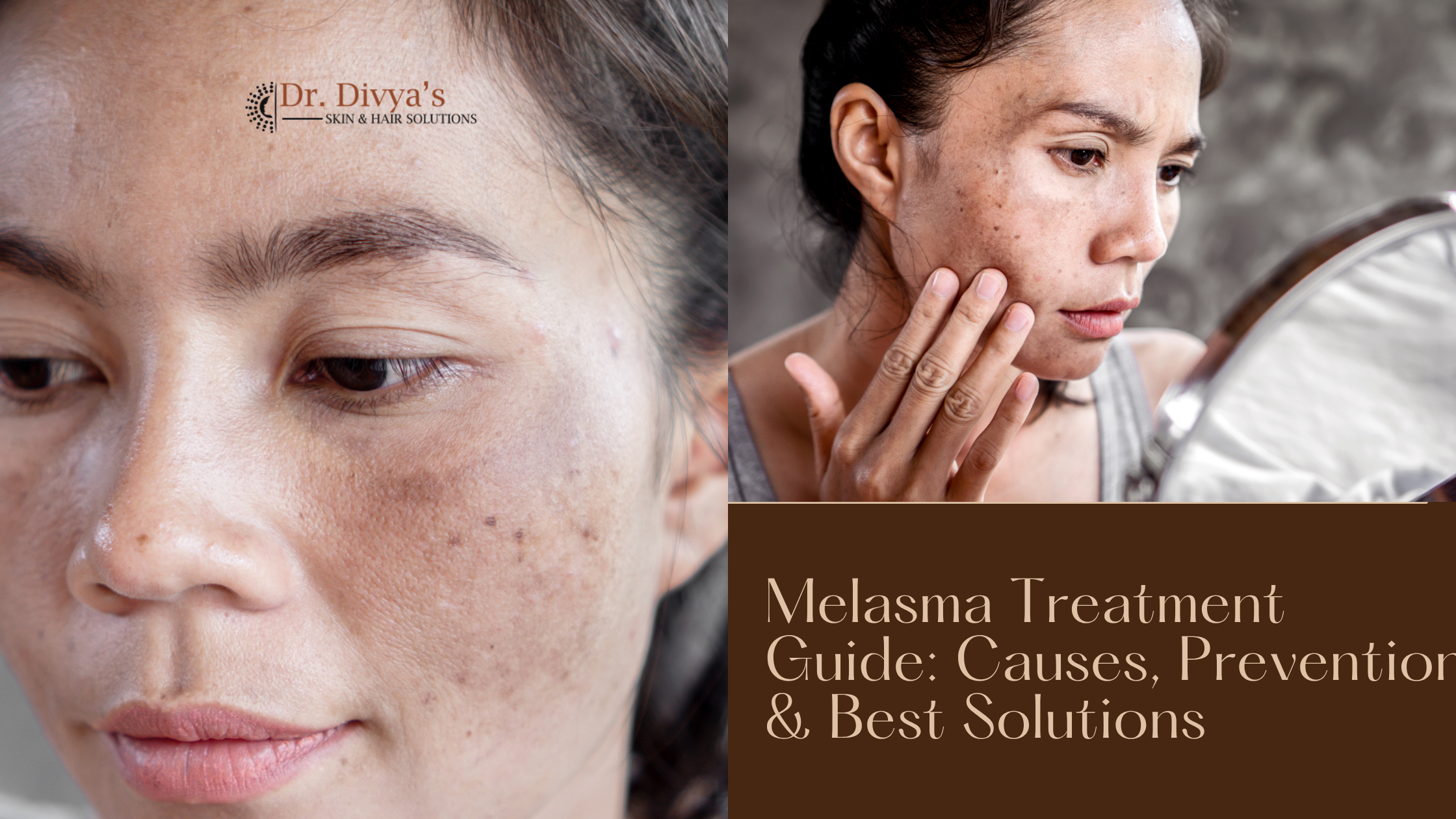
Melasma is a very common skin concern that affects both men and women, but it tends to appear more often in women with medium to darker skin tones. It usually shows up as brown or gray-brown patches on the face—particularly on the cheeks, forehead, nose, and above the upper lip. While melasma isn’t harmful, the uneven pigmentation can sometimes affect confidence and self-esteem.
The positive side? With the right care and professional treatments, melasma can be effectively managed. Let’s walk through the main causes, prevention tips, and the most reliable treatment options available.
What Causes Melasma?
Melasma develops due to multiple factors. Some of the most common include:
- Sun Exposure: UV rays stimulate excess melanin production, often worsening existing pigmentation.
- Hormonal Changes: Pregnancy, contraceptive pills, or hormone therapy can disrupt melanin balance in the skin.
- Family History: If melasma runs in your family, your chances of developing it are higher.
- Skin Irritation: Harsh chemical products or cosmetics may irritate the skin, leading to pigmentation flare-ups.
- Thyroid Disorders: Hormone imbalances linked to thyroid issues may also play a role.
How to Prevent Melasma
Melasma may not always be completely avoidable, but you can reduce its severity and prevent frequent flare-ups with these tips:
- Use a broad-spectrum sunscreen (SPF 30+) every single day—even indoors.
- Wear hats and sunglasses whenever you step outdoors.
- Avoid products that irritate your skin or trigger inflammation.
- Stick to a gentle, consistent skincare routine with mild cleansers and moisturizers.
- Manage stress levels and maintain a hormone-balanced lifestyle
Best Treatment Options for Melasma
If melasma patches are already visible, professional treatments guided by a dermatologist can make a big difference:
- Topical Creams: Prescription creams with hydroquinone, azelaic acid or tretinoin, sometimes in a supervised triple combination, help lighten dark patches.
- Chemical Peels: Dermatologist-approved peels exfoliate the skin and gradually reduce pigmentation.
- Laser Therapy: Low-energy laser toning is sometimes used cautiously, but lasers can worsen melasma and are not first-line.
- Microneedling with PRP: Being studied for melasma, but evidence is limited.
- Oral Medications: In selected cases a dermatologist may prescribe oral tranexamic acid after screening for clotting risk.
- Customized Treatment Plans: Since skin types differ, a personalized approach ensures safer and more effective results.
Conclusion
Melasma may be persistent, but it’s absolutely manageable with the right care. By protecting your skin from the sun, avoiding harsh products, and seeking expert dermatological guidance, you can achieve a clearer, more radiant, and even-toned complexion.
Don’t wait to achieve the radiant, even complexion you deserve. Book your consultation with Dr. Divya Sharma today at Dr. Divya’s Skin & Hair Solutions in Whitefield, Bangalore.
Contact: +91 96206 38388
Email: info@drdivyasharma.com
FAQs
Q1. Is melasma permanent?
Not always. With proper care and treatment, melasma can fade, but it may return if underlying triggers such as sun exposure or hormones aren’t controlled.
Q2. Can home remedies cure melasma?
Natural remedies might help mild pigmentation, but dermatologist treatments are far more effective and reliable.
Q3. Is melasma linked to pregnancy?
Yes, melasma during pregnancy is quite common and is often called “the mask of pregnancy.”
Q4. What’s the most effective treatment for melasma?
The best treatment depends on your skin type and severity of pigmentation. Dermatologists may suggest topical creams, peels, or laser-based therapies.