

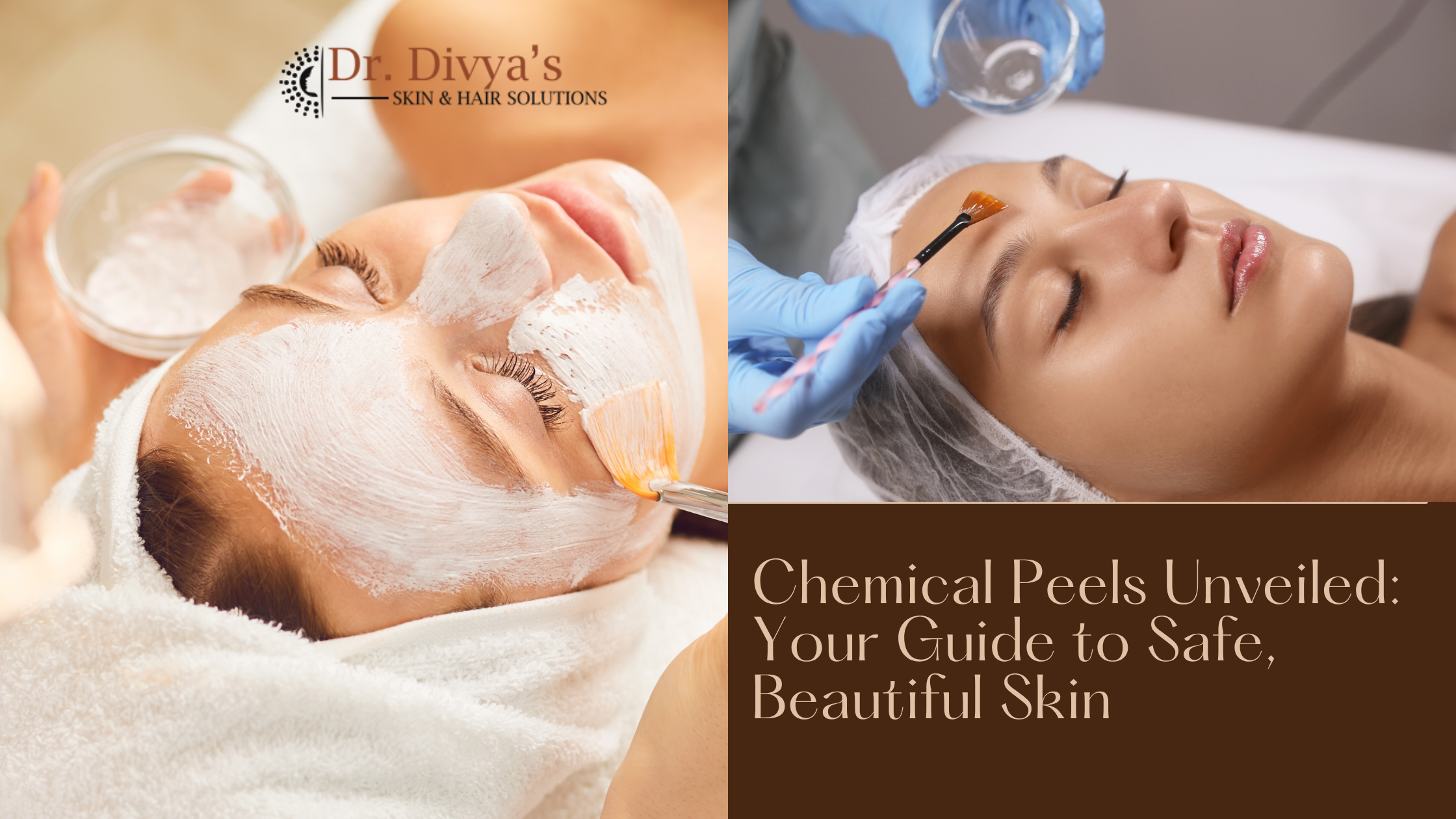
If you’ve been hoping for smoother, clearer, and more radiant skin, chemical peels might be the perfect treatment to help you achieve your skincare goals. This treatment combines age-old wisdom with modern dermatological science to gently rejuvenate your skin and reveal a fresh, youthful glow.
What Are Chemical Peels?
Chemical peels involve the application of carefully measured, medically approved acids such as glycolic acid, lactic acid, salicylic acid, or trichloroacetic acid (TCA). These acids exfoliate the outer layers of your skin, encouraging natural renewal processes, boosting collagen production, and improving skin texture and tone.
Skin Concerns Chemical Peels Can Address
Under Dr. Divya’s expert care, chemical peels are chosen based on your skin type and concerns, effectively treating:
- Acne and stubborn blemishes
- Uneven pigmentation and melasma
- Sun damage and stubborn tanning
- Fine lines and early signs of aging
- Rough or dull skin texture
- Age spots and discoloration
Choosing a dermatologist-supervised peel means you get the right formulation and strength for your skin, reducing risks of irritation or damage that can happen with unsupervised treatments.
Types of Chemical Peels
Dr. Divya offers a variety of peels depending on your desired intensity and downtime:
Superficial peels: For a gentle glow and quick refresh with minimal recovery—ideal before special events.
Medium peels: Penetrate deeper to treat hyperpigmentation and texture issues, requiring some downtime but delivering deeper results.
Deep peels: Target advanced aging signs and scars; require more recovery but offer transformative skin rejuvenation.
For enhanced results, Dr. Divya often combines peels with laser toning or medical facials.
What to Expect During and After Treatment
A typical chemical peel session lasts 20–40 minutes. You may experience mild tingling or warmth during the procedure. Redness and flaking after the peel are normal signs your skin is renewing itself. Visible improvements usually appear after a few sessions.
Aftercare Tips from Dr. Divya Sharma
- Use broad-spectrum sunscreen (SPF 30+) every day to protect your new skin
- Keep your skin hydrated with moisturizers recommended by your dermatologist.
- Avoid scrubs or exfoliants for at least one week post-peel.
- Attend scheduled follow-ups to maintain your radiant results.
Conclusion
Chemical peels are a well-established way to improve skin texture and tone when performed by a trained professional, though they carry some risks. With Dr. Divya Sharma’s expert guidance, you’re investing in a treatment journey that prioritizes your skin’s health and delivers lasting radiance—not just quick fixes.
At Dr. Divya’s Skin & Hair Solutions, glowing, healthy skin is more than a procedure—it’s a partnership between you and expert care.